How to Identify Termites: A Homeowner’s Guide to Detection


The Hidden Threat to Your Home’s Foundation
Termites are often referred to as “silent destroyers” because they can thrive in your home for years without showing immediate signs of damage. In Malaysia, where the tropical climate is ideal for subterranean termites, homeowners face significant risks to their property’s structural integrity. Detecting an infestation early can save thousands in repair costs and prevent the stress of a compromised living space. Understanding the subtle indicators of termite activity is the first step toward permanent protection. This guide outlines the specific signs to look for and how to conduct a thorough self-inspection.
5 Common Signs of Termite Infestation

Because termites consume wood from the inside out, the surface of your walls or furniture may appear perfectly normal while the interior is being hollowed. However, there are several tell-tale signs that indicate their presence:
-
Mud Tubes:
Subterranean termites build pencil-sized tunnels made of soil and debris to travel between their underground colony and their food source. These are often found on foundation walls, piers, floor joists or even trees.
-
Hollow-Sounding Wood:
When you tap on wooden structures, a dull or hollow sound often suggests that the interior has been consumed.
-
Discarded Wings:
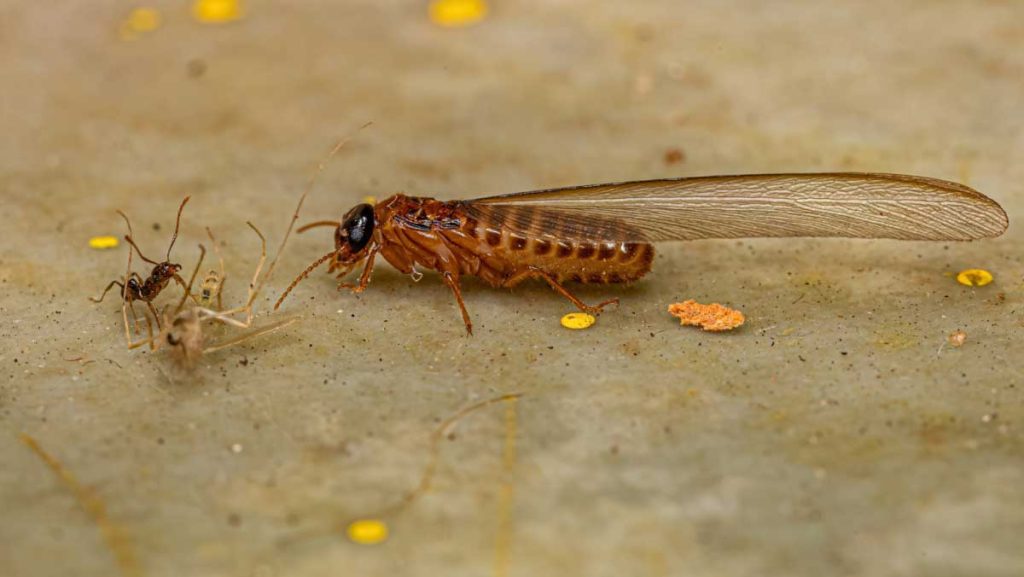
After a swarm, reproductive termites (swarmers) shed their wings. Finding piles of small, translucent wings on windowsills or near light fixtures may indicate termite activity nearby and could suggest an infestation within or close to the property.
-
Tight-Fitting Doors and Windows:
As termites consume wood and introduce moisture, the wood may swell, making it difficult to open or close doors and windows.
-
Frass (Termite Droppings):
Drywood termites often push their droppings out of small holes in the wood. These look like tiny, wood-colored pellets or mounds of sawdust.
Flying Ants vs Termites: Spotting the Difference
During swarming season especially raining season, many homeowners mistake flying termites for flying ants. While they look similar at a glance, their physical characteristics are quite different:
| Feature | Flying Ants (Alates) (Chinese called this “water ant水蚁” , Malay called this “Kelkatu”) | Termites |
| Antennae | Elbowed or “bent” | Straight and “beaded” |
| Waist | Pinched, narrow waist | Broad, thick waist |
| Wings | Two pairs of unequal length | Two pairs of equal length |
| Wing Texture | Distinct veins visible | Transparent or lacy appearance |

Distinguishing between the two is crucial because while ants are a nuisance, termites represent a direct threat to the building’s structure.
A Step-by-Step Self-Inspection for Homeowners
Regularly checking your property can help catch an infestation before it spreads. Follow these steps for an effective home audit:
-
Check the Perimeter:
Walk around the exterior of your house and look for mud tubes on the foundation or walls. Pay close attention to areas where soil meets the structure.
- Inspect Wooden Fixtures:
Use a screwdriver to gently tap on door frames, skirting boards, and built-in cabinets. Listen for a hollow sound or check if the wood feels soft or “papery.” - Monitor Moisture Points:
Termites are attracted to moisture. Check for leaking pipes, clogged gutters, or areas where water pools against the house. - Examine Storage Areas:
Clear out dark, cluttered areas like storerooms or under-stair closets. Termites prefer undisturbed, dark environments. - Look for Surface Bubbling:
Paint that appears blistered or bubbled can sometimes indicate termite activity underneath the surface.
Protecting Your Investment and Your Family

Identifying termites early is only the first half of the battle. If you discover signs of an infestation, it is vital to avoid disturbing the area with household sprays, as this can cause the colony to migrate deeper into the structure. Based on our 41 years experience in termite and pest control, permanent termite control requires professional assessment and strategic baiting systems to eliminate the colony at its source.
Whether you are performing a house cleaning or simply conducting a routine check, staying vigilant is part of responsible home ownership. Safeguarding your home ensures a safe environment for your loved ones and preserves the value of your property for years to come.
Contact Ridpest for a professional assessment today!